Showing posts with label basil. Show all posts

Kitchen Tip: Make Pesto from Wilting Greens (Basil Arugula Pesto Recipe)

Do you ever find yourself with herbs or leafy greens that are about to go? Here is an easy (and delicious) way to use up the leftovers before they die.

Turn them into pesto!

Classic pesto is made with basil, pine nuts, garlic, and a bit of Parmesan cheese. It's delicious, but the truth is that I rarely make it that way. Pesto is actually more of a technique than an actual recipe; it's the act of crushing together a variety of herbs and aromatics. The word pesto comes from the word "pestare," which means to pound or to crush.

The old fashioned way is to do this by hand, but I use my food processor. Because there is no need to complicate things.

You can use whatever you have on hand to make a great pesto. I typically like to combine an herb (like basil or parsley or cilantro or mint) + a leafy green (like arugula or kale or spinach) + a nut or seed (like almonds or pine nuts or pumpkin seeds or walnuts) + garlic (pretty much the only essential part) + grated hard cheese (like Parmesan or aged Gouda or manchego). You can add spices like toasted cumin seeds or red chile flakes, if you'd like. A little oil and water help loosen things up a bit. A sprinkle of lemon juice keeps the green greener longer. (Say that 5 times fast!)

You can really play around with the technique to create different flavor profiles. For example:

Mint + cumin + walnuts = Mediterranean flavor

cilantro + chile flakes + pumpkin seeds = Mexican/Latin flavors


The pesto you see here is made from basil, arugula, and almonds. It's fragrant and a bit peppery from the arugula. Tossed with pasta, it made for a perfect "cleaning out the fridge" kind of dinner. Eugene also ate a few scoops of the pesto with fresh mozzarella for a snack this weekend, and I used a bit of it on steak.

You can also use it as a filling for my easy homemade pesto ravioli! And here is a great way to freeze pesto for quick meals all year.

The recipe for my basil arugula pesto is below, but remember to just use it as a guideline and substitute in whatever you have on hand.

****
Like this recipe? Share the photo and link with a friend on Facebook or Pinterest so that more folks can enjoy it! I'd also love if you'd consider subscribing to my newsletter, follow me on Twitter, become a fan on Facebook, or sign up to receive my once-a-week e-mail updates by filling in your address in the box on the right.


Basil Arugula Pesto Recipe

Ingredients
1/3 cup unsalted almonds (use any kind--roasted, blanched, sliced--it all works!)
2 medium cloves garlic
1 teaspoon kosher salt
1 cup basil leaves, rinsed, picked and dried
1 1/2 cups baby arugula
3/4 cup extra virgin olive oil
1/2 cup grated parmesan cheese
1 tablespoon lemon juice

Directions
In a food processor, combine the almonds, garlic, and salt, and pulse a few times until coursely ground. Add the basil and arugula, and pulse again a few times until coursely chopped and evenly distributed. Add the cheese, then slowly pour in olive oil and lemon juice, as needed, to loosen the mix until it is creamy. Add a splash or two of water if you need additional liquid. Taste and adjust seasoning as necessary.

Store in a sealed jar or container in the fridge. Can also be frozen.
To Use: Cook pasta according to package directions. After draining, add several large spoonfuls of pesto to pasta and toss to coat, adding a bit of pasta water if necessary to make into a sauce. Add as much pesto as you'd like (I love a good thick coating).

Variation: You can also splash in a bit of heavy cream for a pesto cream sauce. 

0

Whole Wheat Strawberry Shortcake with Basil Macerated Strawberries

So here's a confession: I've never liked strawberry shortcake.

If I see it on a dessert menu, I skip right over it. If someone pulls it out at a birthday party or after a weekend barbecue, I get really disappointed. I've got very particular tastes when it comes to dessert, and items involving fresh berries and cream tend to fall right to the bottom of the list. (Unless said berries and cream are on top of a chocolate torte, because then they go right to the top!).

So it was with a sigh of resignation that I served myself a bowl of strawberry shortcake at a friend's party a few weeks ago. She had set out a basket of biscuits, a bowl of fresh berries, and some vanilla ice cream and urged us each to assemble our desserts. Eugene was thrilled as this is totally his thing. (The man often prefers fruit to cake. Weirdo.)

I'm not one to turn down dessert (surprise!) so I went with it, and as I'm sure you can now guess, I ended up loving it. Like really, really loving it.

It helped that the berries were in kick-ass peak season, but it was really the biscuits that sang to me.

Until then, the strawberry shortcakes I'd had were pretty bad. There were the kinds made with those funny little round golden "dessert shells" they sell in the grocery store near the berries. When I was little I found them adorable and would poke and squeeze them whenever I saw them, much to my mother's chagrin.

(I admit that I still totally get the urge to squeeze them when I see them. And sometimes I just do it. I also like to poke and squeeze Sno Balls.)

I finally got my mom to buy a package of those shells once (probably out of guilt since I'd destroyed so many over the years) and I remember how excited I was to finally taste them, only to end up disappointed that the flavor did not live up to their looks.

The other kind of strawberry shortcake I grew up with is that North Jersey bakery variety--basically a sweet yellow cake layered with pastry cream or overly sweetened whipped cream (or both), and lackluster berries; a cloying combination that completely defeats the potential awesomeness of this dish.

The difference here was all in the shortcake itself, which was really just a biscuit--light, barely sweet, with even a tiny hint of salty butter in each bite. Instead of mushy cake, it had a great flaky texture and just enough bite, softened a little bit by the natural juices of the berries. In a word, perfection.

I was totally impressed and went home determined to recreate the dish (I think I should rename this blog "Recreating that Dish" as that seems to be where all my recipe ideas come from lately.)

Our friend told us that she had purchased the biscuits from a local bakery (I think it was either Amy's or Sarabeth's), so I hunted around online until I found this Russ Parsons/LA Times recipe on Smitten Kitchen that looked like a great start. I changed it up a bit, increasing the butter, using raw egg yolks, and most importantly, swapping in whole wheat flour for a nutty, whole grain result. I also had the idea to macerate the berries with some summery fresh basil. (Because strawberries and basil are AWESOME together!)

I layered this with two shortcakes instead of splitting one (because I'm decadent like that) and topped it off with a generous dollop of unsweetened freshly whipped cream. The final dessert was brilliant! I also found that the leftovers kept well until the second day (although they were definitely best on the first.) If you don't like or want whipped cream, you can also use plain Greek yogurt or vanilla ice cream.

(The remaining shortcakes actually were quite fun for snacking on for a few days. They developed a soft, almost cornbread like texture that I found incredibly addictive.)


****
New to Always Order Dessert? Consider subscribing to my RSS feed, follow me on Twitter, become a fan on Facebook, or sign up to receive my once-a-week e-mail updates by filling in your address in the box on the right. I also offer custom menu planning services, group cooking classes, and offer a variety of culinary workshops in the NYC area. Click here to find out more!

And if you ever need any entertaining or cooking advice, please don't hesitate to
e-mail me.
Thanks for reading! 


Whole Wheat Strawberry Shortcake with Basil Macerated Strawberries
Adapted from Russ Parsons via Smitten Kitchen
Print this Recipe
Ingredients
1 2/3 cup white whole wheat flour or whole wheat pastry flour
3 tablespoons granulated sugar
1 tablespoon baking powder
2 egg yolks, cold
1 pinch Kosher salt
1 stick cold unsalted butter, cut into small cubes
zest of 1 whole lemon
2/3 cup heavy cream, cold
1 tablespoon Turbinado sugar ("Sugar in the Raw")
1 pound strawberries, washed, hulled, and quartered
2 tablespoons Turbinado sugar ("Sugar in the Raw")
6 large basil leaves, julienned
1 tablespoon lemon juice
1 cup heavy cream

Directions

Preheat oven to 350 degrees. Line a baking sheet with parchment paper and set aside.

In a large bowl, whisk together the flour, sugar, baking powder, salt, and lemon zest. Add the butter and use your fingers or a pastry cutter to work the butter into the dough until it resembles course crumbs.
Whisk together the egg yolks and heavy cream in a separate bowl and pour into the flour mixture. Stir with a wooden spoon until the dough comes together.
Turn out onto a flour-dusted surface and knead briefly before shaping into a large circle. Use a rolling pin to roll it out until it is about 1" thick. Use 3" cookie cutters to cut out circles of dough, transferring each to the prepared baking pan. Reroll any additional dough and cut until all dough is used.
Brush each round with heavy cream or water and sprinkle generously with the Turbinado sugar. Bake for 15-20 minutes or until risen and golden. Remove from the oven and let cool slightly before serving.

While the shortcakes bake, combine the strawberries with the sugar, julienned basil, and lemon juice. Let stand at room temperature until the berries soften and release their juices, at least 20 minutes.
To assemble, whip the remaining cold heavy cream until soft peaks form. Place one shortcake in a bowl, top with several spoonfuls of the berries and juice. Add a large scoop of the freshly whipped cream and top with a second shortcake. Garnish with a little more whipped cream and a fresh basil leaf. Serve immediately.
0

Bagged Lunch Ideas: Mediterranean Whole Wheat Pasta Salad with Basil Vinaigrette

I served a version of this pasta salad at the very first dinner party I ever hosted. I was 16.

I don't remember the exact occasion, but I'd invited a group of my nerdy high school friends over and we feasted on a Mediterranean inspired spread of homemade roasted garlic hummus, tzatziki, balsamic chicken flat-bread pizzas, bruschetta, crudite, and this salad. For dessert I made bread pudding with butterscotch sauce (two things I'd been obsessed with at that point in my life). There may have also been some Arbor Mist served, but we'll just forget about that part.

I remember that this salad was one of my favorites of all the dishes, and that I made so much of it that my family and I ate the leftovers for the rest of the week. It's one of those incredible dishes that just seems to get better by the day, as the pasta and cheese absorb more and more of the tangy fresh basil vinaigrette.

This is a great salad for lunch; you can keep it as-is or add some grilled chicken or cooked shrimp to round it out. It's also easy to adapt depending on the season. I've made it with sun-dried tomatoes in the winter and cherry tomatoes in the summer. I've added steamed broccoli florets when I had some in the fridge. You can play around with the cheeses or use tricolor rotini to make it a little more festive.

This also make a great salad for a picnic or outdoor barbecue since it's oil-based and will keep at room temperature for several hours.


****
New to Always Order Dessert? Consider subscribing to my RSS feed, follow me on Twitter, become a fan on Facebook, or sign up to receive my once-a-week e-mail updates by filling in your address in the box on the right. And if you ever need any entertaining or cooking advice, please don't hesitate to e-mail me. Thanks for reading!


Mediterranean Whole Wheat Pasta Salad with Basil Vinaigrette


Ingredients
12 oz whole wheat rotini (or other small whole wheat pasta such as penne)
1 cup roughly chopped kalamata olives (preferably not canned)
1 red bell pepper, diced
1 cup feta cheese, diced
1 cup fresh mozzarella pearls, drained (or diced fresh mozzarella)
1 cup cherry or grape tomatoes, sliced in half
1/4 cup red wine vinegar
3/4 cup extra virgin olive oil
3 garlic cloves, peeled
zest of one whole lemon
2 cups fresh basil leaves, washed and ripped off the stems
1/2 teaspoon sugar

Kosher salt
Black pepper


Directions
Cook the pasta according to box directions until al dente. Drain and rinse with cold water until cool to the touch. Drain and place in a large bowl.

Add the olives, bell pepper, feta, mozzarella, and grape tomatoes to the pasta and mix until evenly distributed.

In a blender or food processor, combine the vinegar, olive oil, garlic cloves, lemon zest, basil, and sugar. Process until smooth and emulsified (it will look almost a little bit creamy.

Pour the dressing into the salad and toss well to coat. Season with kosher salt and black pepper to taste. Let chill for at least 3 hours before serving (can be made up to 2 days in advance; will keep well in the fridge for about a week).
0

Fresh Basil Pesto Agnolotti (Ravioli)


A few months ago, I read a wonderful book called The Lost Ravioli Recipes of Hoboken. It's the story of a woman--a historian--who sets about tracking down the long-lost ravioli recipes her relatives once made in Italy. The story weaves food history with memoir and recipes as she bounces back and forth between Italy and New Jersey, past and present.

What stayed with me most is a wonderful scene where the author spends a long day pouring through ancient cookbooks in the library stacks. She's desperately trying to figure out why it is that the women in her family always stuffed the ravioli with raw meat instead of cooked, the way it is traditionally done in Italian homes. She searches and searches for a reason and in doing so realizes that every culture and tradition has its own version of ravioli and that each kind fed off of each other.

She learns, for example, that the varenyky and pelmeni of Eastern Europe originated in China and were brought West by the Mongols into Siberia from which they gradually spread throughout Russia and Eastern Europe. The kreplach served in Jewish homes during the High Holidays is said to have originated in the ravioli introduced to Germany by Ashkenazi Jews who arrived there after having been expelled from Venice in the 14th century. She realized the similarities between her traditional family dish and the manti that is popular in Turkey, the shishbarak eaten in Lebanon, empanadas in Latin America, and even (unexpectedly) sandwiches (meat and/or cheese layered within slices of dough!).


I thought about those connections again recently when I stood in my kitchen rolling little balls of chilled pesto genovese and tucking them into premade Gyoza wrappers. This method is an easy and increasingly popular way to make homemade ravioli without the laborious (albeit incredibly satisfying) work of rolling out pasta dough from scratch. It is also a pretty tangible example of the way that cultures meld seamlessly in the kitchen (sealed with a wet fingertip dipped in starch).

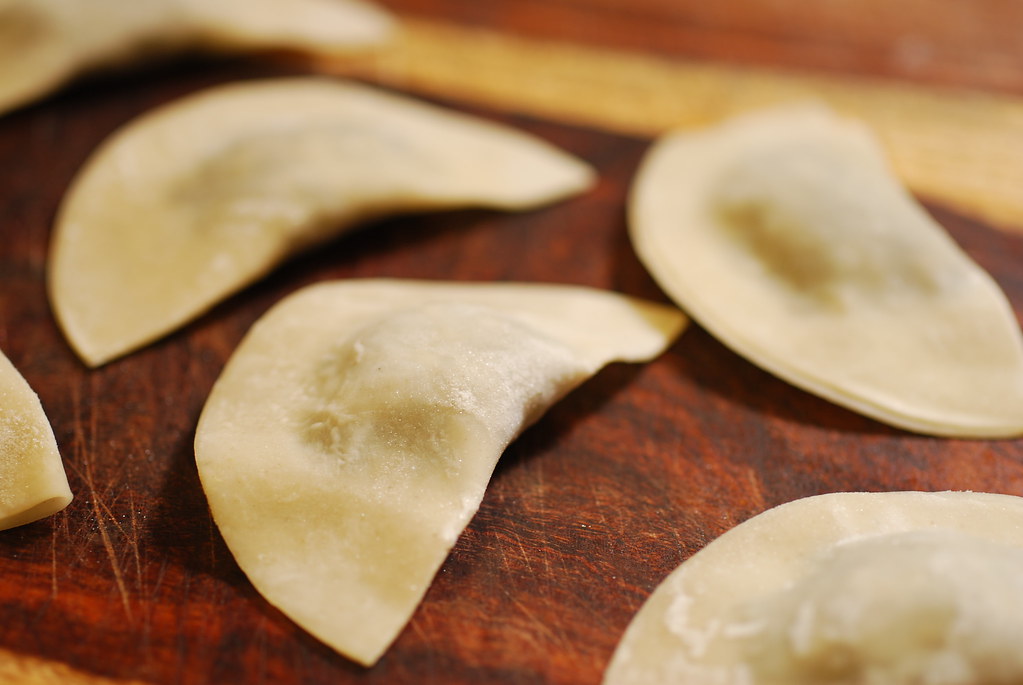
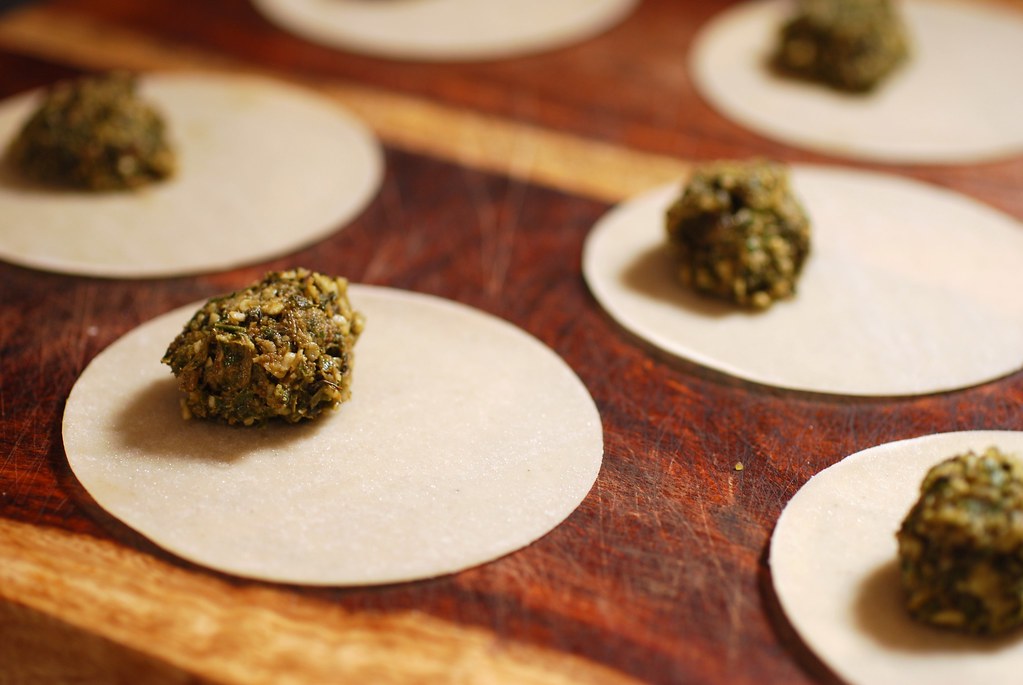
The recipe itself is a simple one that belies the history-laden centuries that precede it. Simply a basic pesto of basil crushed with olive oil, garlic, hard cheese, salt, and almonds (I was out of pine nuts) tossed into the food processor or blender or (as I suggested to an incredulous coworker this afternoon) even roughly chopped by hand with the rapid rock of a mezzaluna. Rolled into little balls in the palm of my hand and then placed carefully on one half of the packaged rounds (or squares; won ton wrappers work too). A little finger bowl of water is all the glue necessary to bind the halves together forming neat half-moon shapes.


I should note that this technique actually produces a pasta shape called Agnolotti, which means "priest caps" because of the way the folded over half-moon shape mirrors the little curved hats priests once wore. It's now come to refer to any kind of stuffed pasta that is folded over from one piece of pasta, instead of two pieces layered on top of each other.

After a quick boil in salted water, the Agnolotti come out whispery light and translucent. A drizzle of olive oil or a quick shave of Pecorino and the dish is complete (the sauce, after all, is inside).


This pesto recipe can be easily modified and multiplied as necessary. Try adding roasted red peppers or anchovies. Swap in any variety of nut. And don't even feel restrained by the basil. I'm actually toying with a version made with a Thai-style version made with cilantro, ginger, and peanuts. But that will have to wait for another afternoon.


Fresh Basil Pesto Agnolotti (Ravioli)

For the Pesto:

1 large bunch of basil leaves, washed and patted dry with a towel
3-4 cloves of garlic
1/2 cup raw pine nuts (or almonds, walnuts, etc.)
3/4 hard cheese such as Parmigiano-Reggiano or Pecorino Roman, coursely grated
1/4 cup extra-virgin olive oil (plus more if necessary)
1 teaspoon of lemon juice (optional)

Combine all the ingredients except for the olive oil in your food processor with the chopping blade attached. Pulse while gently drizzling in the olive oil. You want to finely chop all the ingredients without pureeing them. Once it is ready, taste and add salt if necessary. Pour into an air-tight jar or container and store in the refrigerator or freezer.

Note: The lemon juice is optional, but it will help keep the pesto green if it is not all going to be used immediately.

For the agnolotti:

1 package (about 50) Gyoza wrappers
1 cup warm water


To make:

Spread the Gyoza wrappers on a dry and flat surface (make sure it is dry as any moisture will combine with the starch on the wrappers causing them to stick).

Use a teaspoon to measure out a generous rounded portion of pesto into your hand. Roll gently into a ball and place on one half of the wrapper. Work in batches and fill 5 at a time, then use your fingertip dipped in the warm water to brush the outside of each wrapper. Bring the empty side over the filling and pinch shut, making sure to push out from the filling towards the edge in order to remove all the air. This will keep the dumplings shut while boiling. Repeat with remaining wrappers and pesto.

To cook, bring a large pot of salted water to a rapid boil. Add the agnolotti in batches (cook no more than 15 at a time or they'll stick to each other) and let cook for 4-6 minutes or until they rise to the top and look translucent. Remove with a slotted spoon and serve immediately topped with olive oil and grated cheese.

Cook's Note: the agnolotti can be prepared and sealed then frozen to be cooked at a later date. No need to thaw before cooking, just leave them in a minute or two longer.


8
Back to Top